BlockNote
Integrate BlockNote with Strapi

Why Use BlockNote?
Integrating BlockNote can bring an open-source, block-based rich text editor right into your apps. For those interested in creating a Notion-like application using Strapi, this integration offers a great starting point. Unlike traditional editors, BlockNote's block architecture treats each content element—paragraphs, headings, lists, images—as separate units, making document organization feel natural and intuitive.
This integration makes BlockNote ideal for apps where content quality and user experience matter. Leveraging the headless CMS benefits, integrating BlockNote with Strapi provides a modern approach to content management. Curious about implementation? Check out BlockNote's official website.
Why Use Strapi?
Strapi is the leading open-source headless CMS offering features, like customizable APIs, role-based permissions, multilingual support, etc. It simplifies content management and integrates effortlessly with modern frontend frameworks.
Explore the Strapi documentation for more details.
Strapi 5 Highlights
The out-of-the-box Strapi features allow you to get up and running in no time:
- Single types: Create one-off pages that have a unique content structure.
- Draft and Publish: Reduce the risk of publishing errors and streamline collaboration.
- 100% TypeScript Support: Enjoy type safety & easy maintainability
- Customizable API: With Strapi, you can just hop in your code editor and edit the code to fit your API to your needs.
- Integrations: Strapi supports integrations with Cloudinary, SendGrid, Algolia, and others.
- Editor interface: The editor allows you to pull in dynamic blocks of content.
- Authentication: Secure and authorize access to your API with JWT or providers.
- RBAC: Help maximize operational efficiency, reduce dev team support work, and safeguard against unauthorized access or configuration modifications.
- i18n: Manage content in multiple languages. Easily query the different locales through the API.
- Plugins: Customize and extend Strapi using plugins.
Learn more about Strapi 5 feature.
Setup Strapi 5 Headless CMS
We are going to start by setting up our Strapi 5 project with the following command:
🖐️ Note: make sure that you have created a new directory for your project.
You can find the full documentation for Strapi 5 here.
Install Strapi
npx create-strapi-app@latest serverYou will be asked to choose if you would like to use Strapi Cloud we will choose to skip for now.
 Strapi   v5.6.0 🚀 Let's create your new project

To deploy your project, create a new project on the Strapi Cloud dashboard.

? Please log in or sign up.
  Login/Sign up
❯ Skip
After that, you will be asked how you would like to set up your project. We will choose the following options:
? Do you want to use the default database (sqlite) ? Yes
? Start with an example structure & data? Yes <-- make sure you say yes
? Start with Typescript? Yes
? Install dependencies with npm? Yes
? Initialize a git repository? Yes
Once everything is set up and all the dependencies are installed, you can start your Strapi server with the following command:
cd server
npm run develop
You will be greeted with the Admin Create Account screen.
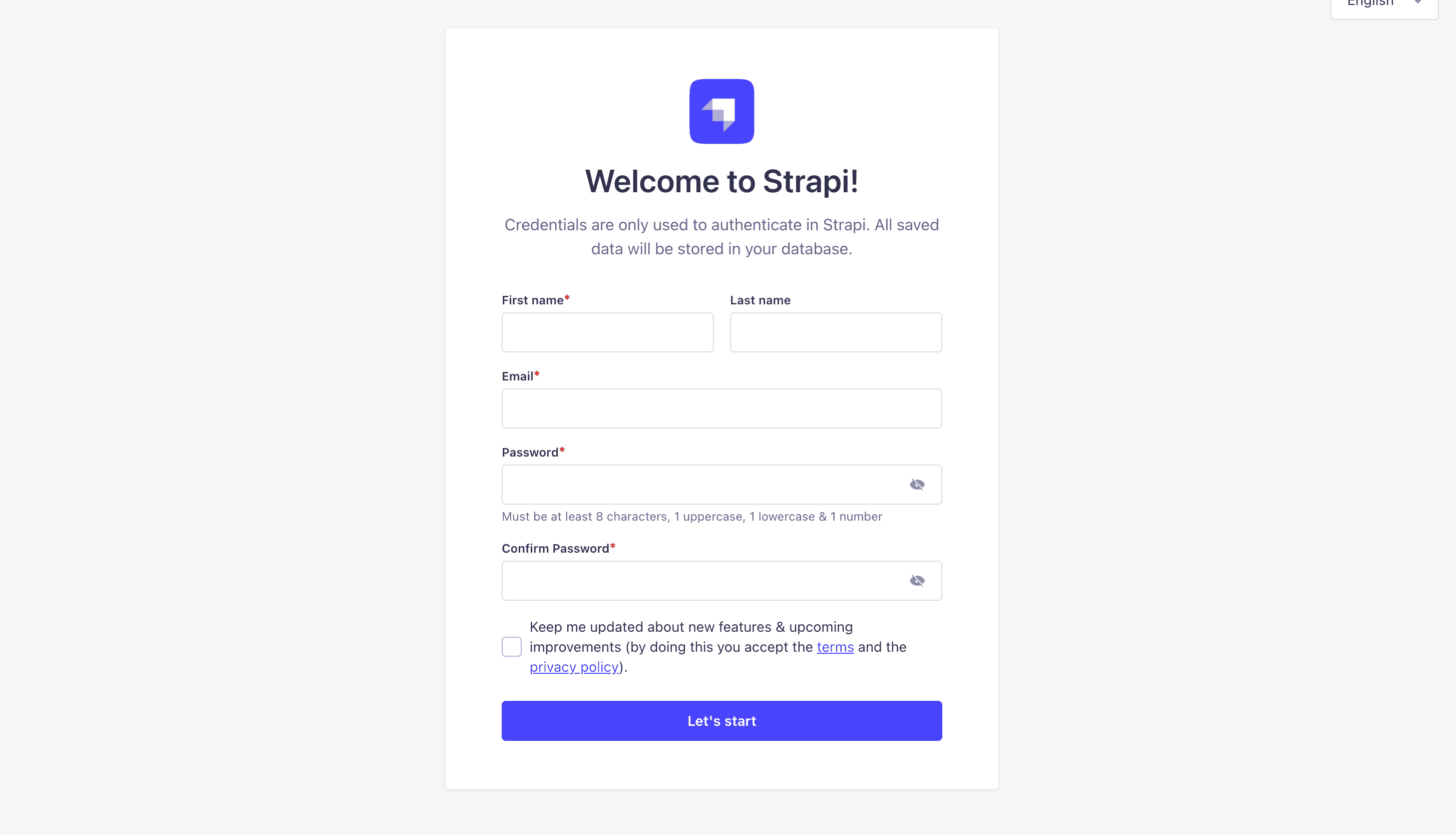
Go ahead and create your first Strapi user. All of this is local so you can use whatever you want.
Once you have created your user, you will be redirected to the Strapi Dashboard screen.
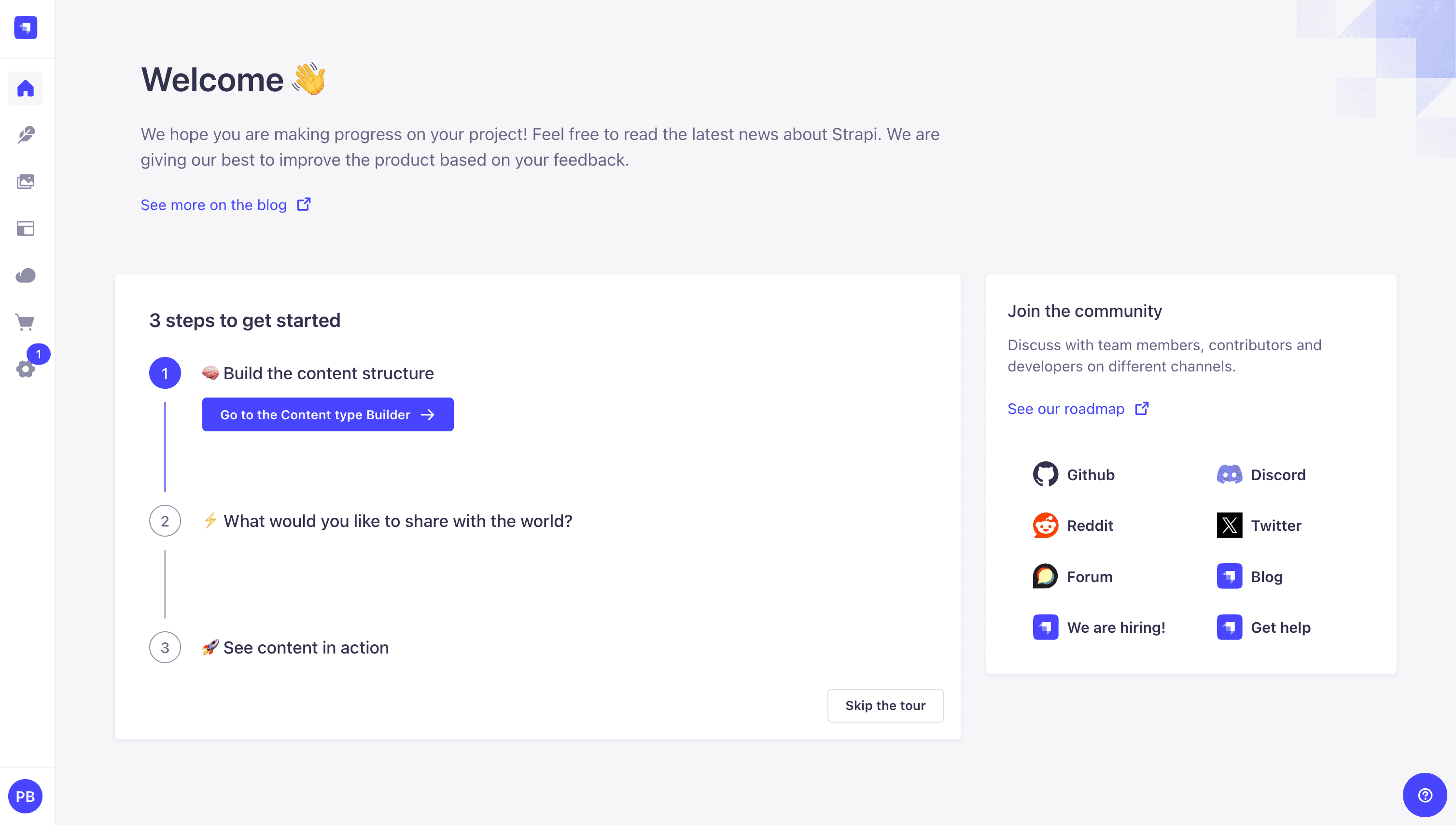
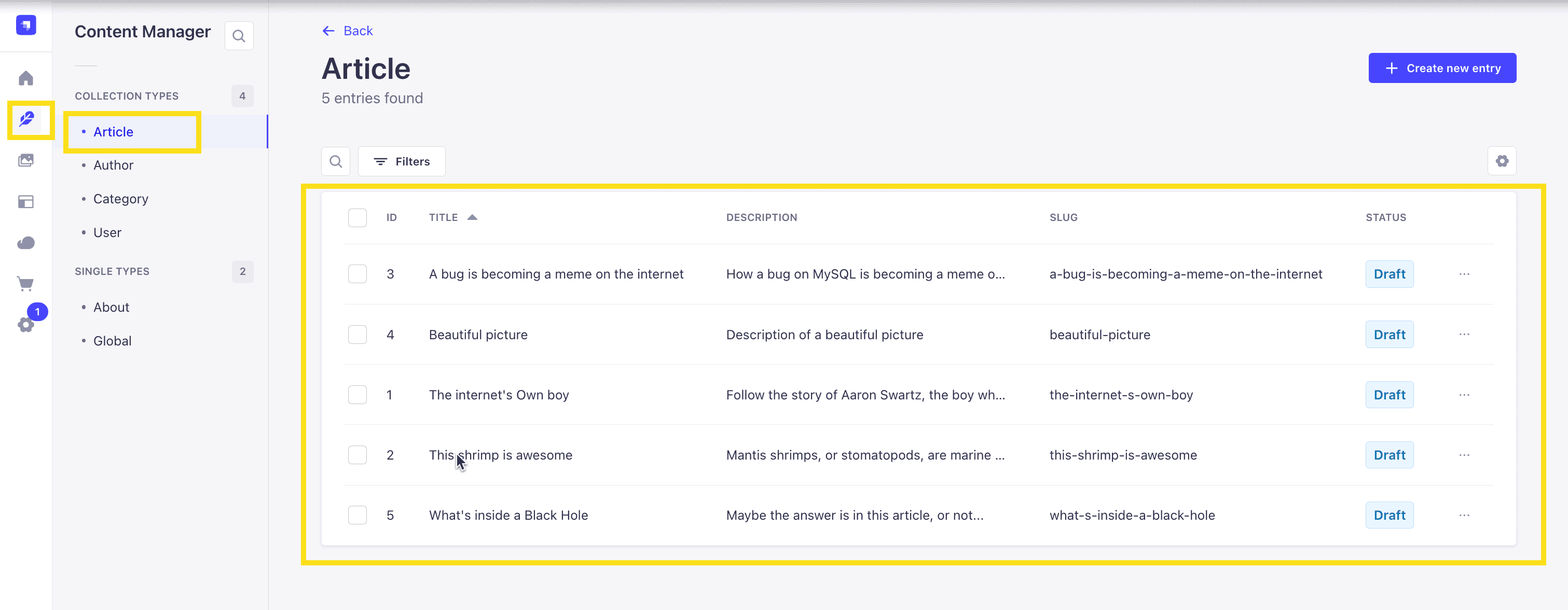
Publish Article Entries
Since we created our app with the example data, you should be able to navigate to your Article collection and see the data that was created for us.
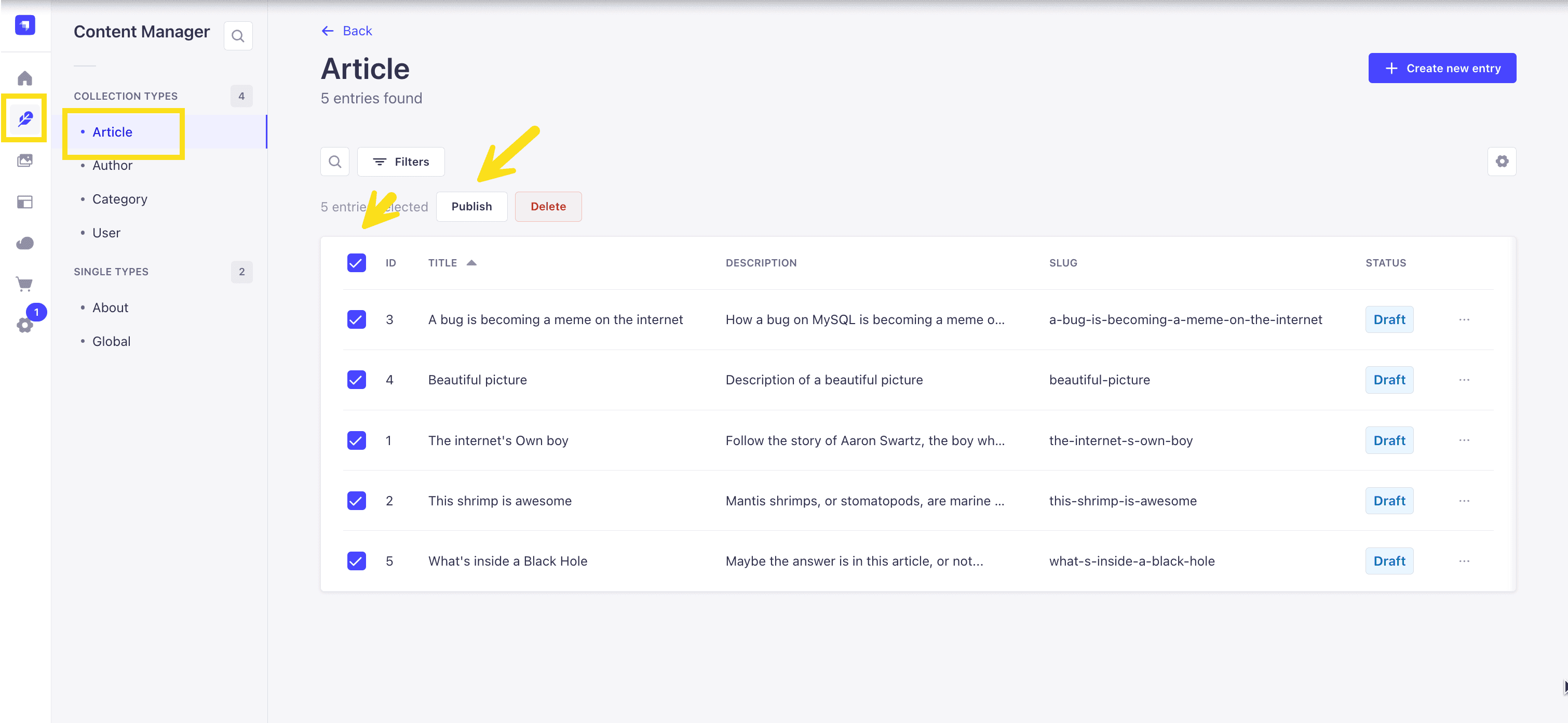
Now, let's make sure that all of the data is published. If not, you can select all items via the checkbox and then click the Publish button.
Enable API Access
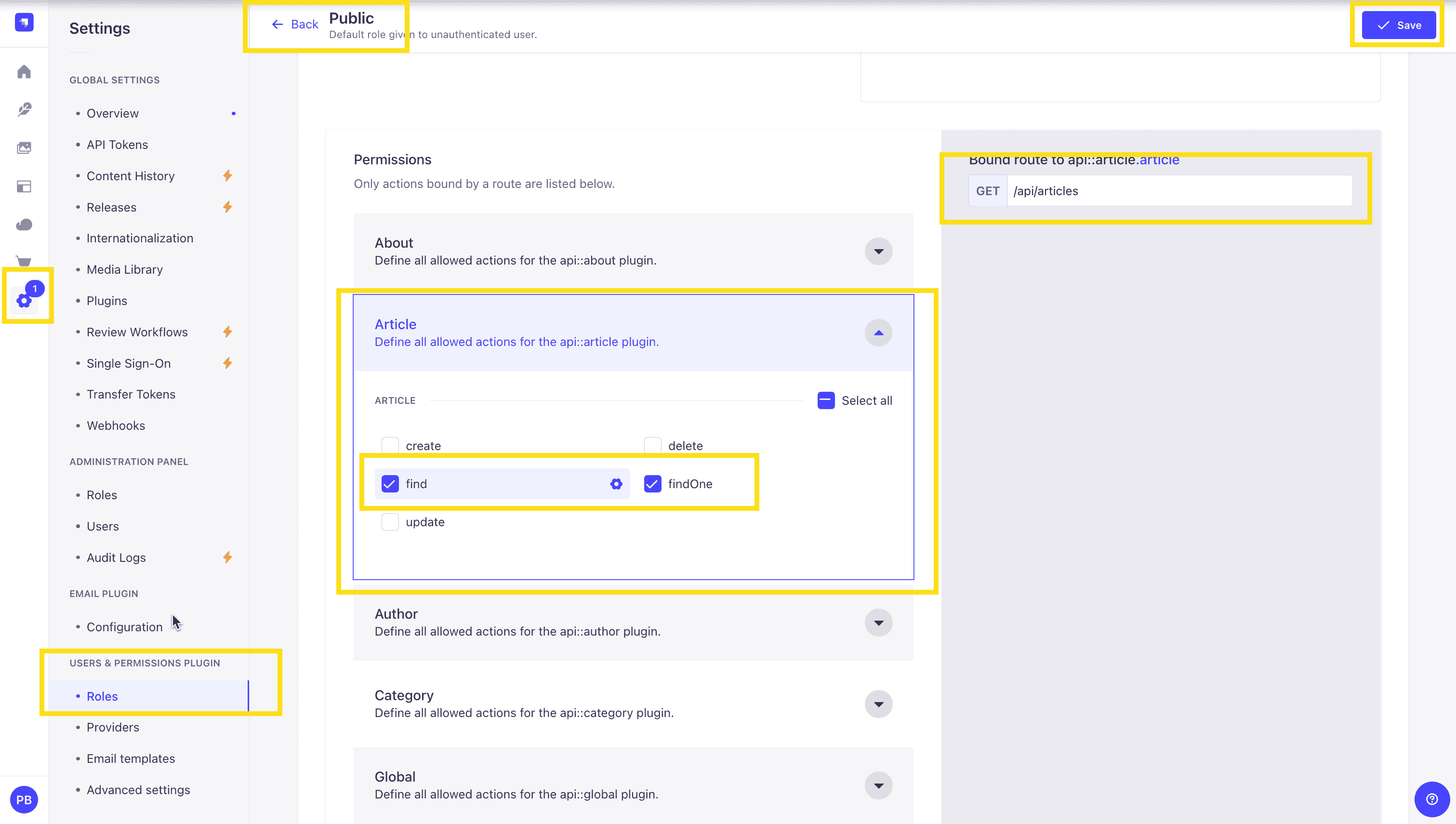
Once all your articles are published, we will expose our Strapi API for the Articles Collection. This can be done in Settings -> Users & Permissions plugin -> Roles -> Public -> Article.
You should have find and findOne selected. If not, go ahead and select them.
Test API
Now, if we make a GET request to http://localhost:1337/api/articles, we should see the following data for our articles.
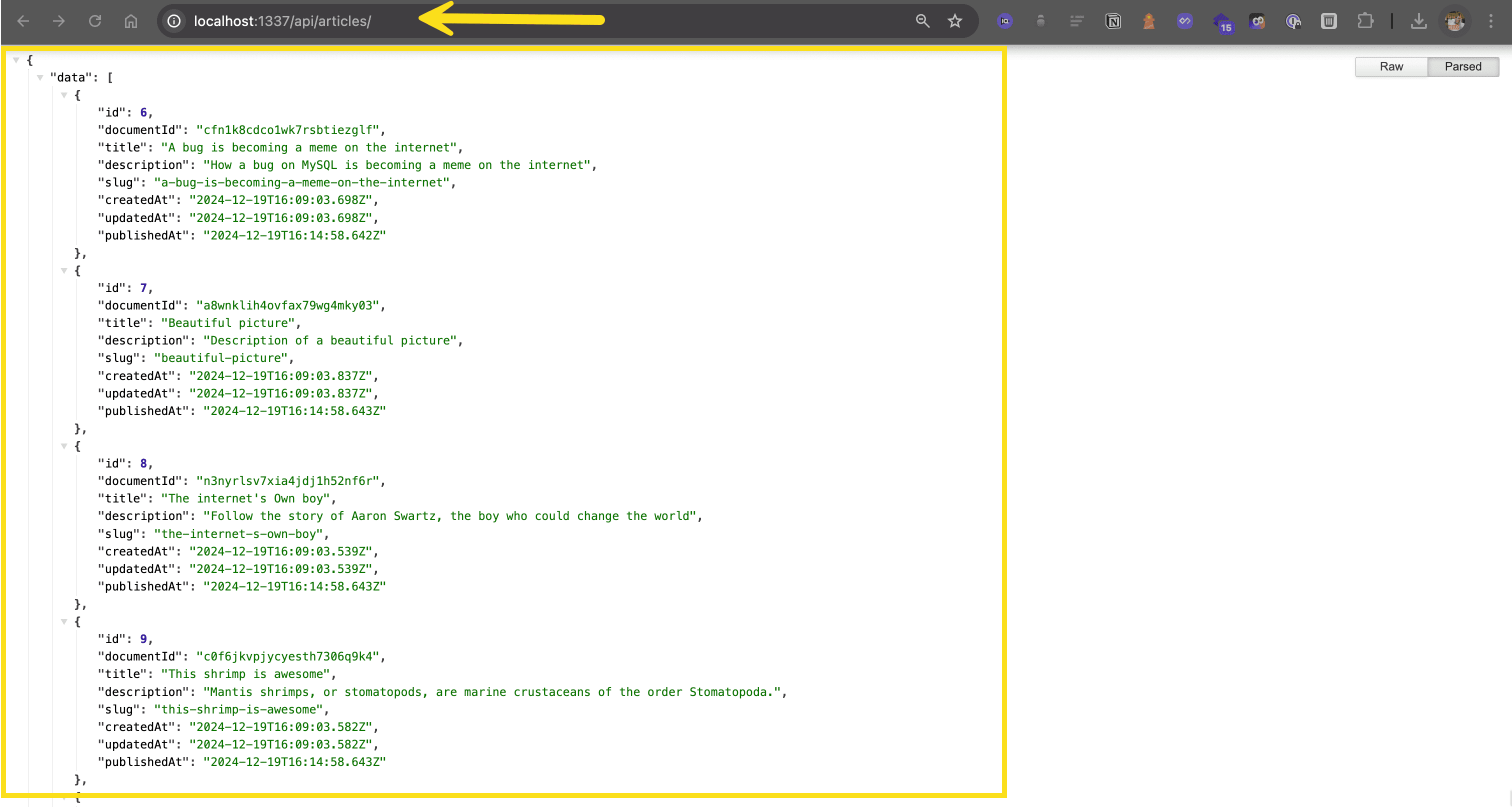
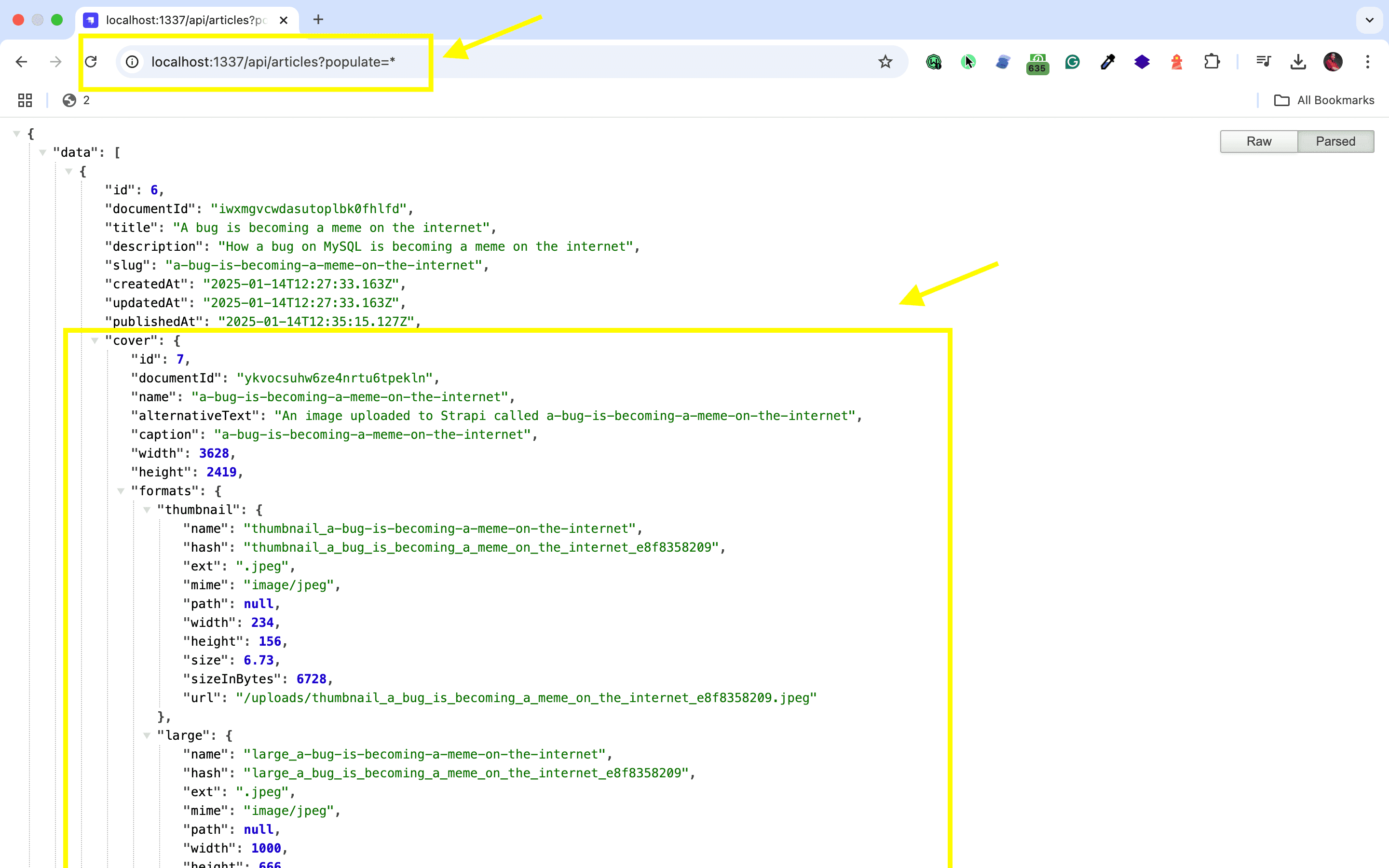
🖐️ Note: The article covers (images) are not returned. This is because the REST API by default does not populate any relations, media fields, components, or dynamic zones.. Learn more about REST API: Population & Field Selection.
So, let's get the article covers by using the populate=* parameter: http://localhost:1337/api/articles?populate=*
Getting Started with BlockNote
Pairing BlockNote with Strapi creates a content management powerhouse by swapping the standard editor for something more intuitive. Here's how to integrate BlockNote with Strapi. For more detailed steps, refer to this Strapi integration guide.
- Install BlockNote dependencies using npm or Yarn by adding the specific packages required for your project.
- To create a custom field structure in Strapi, develop it within a dedicated plugin. Ensure the plugin's directory includes both server and admin panel parts, and register the custom field in both areas to make it functional in Strapi's admin panel.
Code Implementation for BlockNote and Strapi Integration
Let's swap in BlockNote as your editor:
- Create a BlockNote editor component:
import { BlockNoteView, useCreateBlockNote } from "@blocknote/react";
import "@blocknote/core/style.css";

function BlockNoteEditor({ onChange, name, value }) {
 const editor = useCreateBlockNote({
   initialContent: value,
   onEditorContentChange: (editor) => {
     onChange({ target: { name, value: editor.topLevelBlocks } });
   },
 });

 return <BlockNoteView editor={editor} />;
}

export default BlockNoteEditor;
- Register your custom field in your plugin's
index.js:
import BlockNoteEditor from './components/BlockNoteEditor';

export default {
 register(app) {
   app.addFields({ type: 'wysiwyg', Component: BlockNoteEditor });
 },
 bootstrap(app) {},
};
- Update the plugin configuration in the appropriate file to enable the
blocknote-fieldplugin:
module.exports = ({ env }) => ({
 'blocknote-field': {
   enabled: true,
   resolve: './src/plugins/blocknote-field',
   config: {
     // Your plugin configuration options
   },
 },
});
This setup replaces Strapi's built-in editor with BlockNote, giving your content team a more flexible editing experience. The block-based approach feels familiar to anyone who's used Notion, making content creation more intuitive.
By leveraging TypeScript support, you can enjoy the benefits of TypeScript, such as improved code quality and developer tooling. These features are particularly beneficial for frontend developers and headless CMS, as they enhance the development workflow and user experience.
The React-based implementation makes it easier to integrate with a React Native app with Strapi, streamlining your development process across platforms. The modern UI with slash commands and drag-and-drop opens up possibilities for innovative JavaScript projects with Strapi.
By integrating BlockNote with Strapi, you're enhancing your content management system with a modern, powerful editor that boosts productivity and user satisfaction.
Strapi Open Office Hours
If you have any questions about Strapi 5 or just would like to stop by and say hi, you can join us at Strapi's Discord Open Office Hours Monday through Friday at 12:30 pm - 1:30 pm CST: Strapi Discord Open Office Hours
For more details, visit the Strapi documentation and BlockNote documentation.
Frequently Asked Questions
BlockNote is an open-source, block-based rich text editor similar to Notion. It treats each content element (paragraphs, headings, images) as separate blocks, making document organization intuitive and content quality higher.
Create a custom field plugin in Strapi that integrates the BlockNote React component. Register the custom field to replace the default WYSIWYG editor, then use the useCreateBlockNote hook to manage editor state.
BlockNote stores content as JSON representing the block structure. Configure your Strapi content type to use a JSON field for BlockNote content, then render the blocks appropriately in your frontend application.
Yes, BlockNote's plugin architecture allows you to add, remove, or customize available block types. Configure these options when initializing the editor in your Strapi plugin to match your content requirements.
Use BlockNote's rendering utilities or write custom renderers that convert the JSON block structure to HTML or React components. This gives you full control over how the content appears in your application.